
Mumbai terror attacks mastermind Zakiur Rehman Lakhvi is living in relative luxury inside a jail cell.
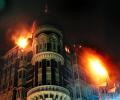
For the seventh time in a row, a Pakistani anti-terrorism court trying the seven accused in the 2008 Mumbai attacks case adjourned the hearing on Wednesday till September 3 as the judge has gone on a summer vacation.
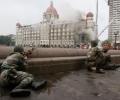
Key plotters of the 26/11 have once again escaped arrest upon the advice of Pakistan's intelligence agency, Inter-Service Intelligence officers.

"Our Army will give a befitting reply to Pakistan if that country violates ceasfire... Kashmir is an integral part of India," Singh said while replying to queries from media persons.

Syed Firdaus Ashraf/Rediff.com presents the names of 10 global terrorists who, according to United Nations Security Council, are operating against India from Pakistan.
The judge of the anti-terrorism court conducting the trial of seven Pakistani suspects charged with involvement in the 2008 Mumbai attacks was changed for the seventh time on Wednesday, with the current incumbent transferred to another court.

The witness, Bhalol Khan, recorded his statement in the anti-terrorism court (Islamabad), which is holding the trial of seven Mumbai attack accused, including LeT operations commander Zaki-ur Rehman Lakhvi.
A Pakistani anti-terrorism court holding the trial of the seven Mumbai attack accused, including mastermind Zaki-ur-Rehman Lakhvi, on Wednesday summoned seven witnesses for the next hearing after the case record was finally submitted to it.

Islamabad High Court on Monday set a two-month deadline for the trial court to conclude the 2008 Mumbai attack case, warning that it would accede to Pakistan government's plea to cancel the bail granted to LeT operations commander Zaki-ur-Rehman if it failed to do so.

Pakistan on Thursday said it has asked India to provide "additional evidence" for the early completion of the Mumbai attack trial in which Lashkar-e-Tayiba operations commander Zaki-ur Rehman Lakhvi and six others are accused.
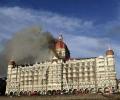
A Pakistani judicial commission will travel to India on September 11 to cross-examine key witnesses of the Mumbai terror attacks, prosecutors informed a court on Wednesday.

Legal experts said fresh proceedings would have to begin in the court in Islamabad and the judge would take some time to acquaint himself with the details of the case.

For the eighth time in a row, a Pakistani anti-terrorism court trying the seven accused in the 2008 Mumbai attacks case adjourned the hearing after a government witness and prosecution lawyers did not show up on Wednesday.

In a notification, the Union home ministry said that Hafiz Talha Saeed, 46, has been actively involved in recruitment, fund collection, and planning and executing attacks by the Lashkar-e-Tayiba in India and Indian interests in Afghanistan.

A Pakistani company had sold eight Japanese Yamaha engines to one of the 2008 Mumbai attack facilitators who supplied them to terrorists.
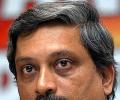
Defence Minister Manohar Parrikar on Thursday dismissed his Pakistani counterpart Khawaja Asif's statement on use of nuclear weapons.
Pakistani-American terrorist David Coleman Headley on Thursday exposed how Inter-Services Intelligence and Lashkar-e-Tayiba majorly funded terror operations in India.

Testifying before a Mumbai court for the second day on Tuesday, Pakistani-American terrorist David Coleman Headley said LeT had planned to attack Indian defence scientists at the Taj Mahal Hotel in Mumbai and that he was asked by Pakistan's ISI to recruit Indian armymen to spy for them.

On a day Mumbai attack mastermind Zaki-ur-Rehman Lakhvi was released, Prime Minister Narendra Modi gave a veiled message to Pakistan, saying no country should provide shelter to terrorists but should punish them.

The home ministry said these individuals are operating from Pakistan and other foreign soil and involved in various acts of terrorism.

Experts trace the reasons for the 26/11 attacks to the Pakistan's military interest in three key areas: Kashmir, Afghanistan and nuclear armaments.
"The foreign ministry has written to the Indian government asking it to send all 24 Indian witnesses to Pakistan for recording statements in the trial court in the Mumbai attack case," Prosecution Chief Chaudhry Azhar said.

However, the Pakistani-American LeT commander Zakiur Rehman Lakhvi stopped him, saying something more "adventurous" was in store for him.
A Pakistani anti-terrorism court on Thursday adjourned the Mumbai attacks case for three weeks after the prosecution said India had not submitted a report on the cross-examination of key witnesses by a Pakistani judicial commission.

Significantly, for the first time, the FATF put Myanmar in the "high risk jurisdictions subject to a call for action", often referred to as the watchdog's black list.

Musharraf said that the present conflict between India and Pakistan was not an ideology based issue of a particular ruling party, but due to an 'individual'.

Empowerment of the National Investigation Agency (NIA) with extra territorial jurisdiction and declaration of Maulana Masood Azhar, Hafiz Muhammad Saeed, Zakiur Rehman Lakhvi and Dawood Ibrahim as terrorists after legislative amendment were counted among its achievements by the MHA, headed by Union Home Minister Amit Shah.

On the sixth anniversary of the 2008 Mumbai terror attacks, Home Minister Rajnath Singh on Wednesday voiced concern over the "very slow" progress in the trial of the case in Pakistan and demanded that the perpetrators be punished at the earliest.
Union Home minister Rajnath Singh asked Opposition parties if they were prepared to apologise to the nation for their "malicious campaign" against PM Modi over the killing of Ishrat Jehan.

Pakistan's zero tolerance policy against terrorism is questionable given its reluctance to take action against Lashkar-e-Tayiba and the perpetrators of the Mumbai terrorist attack, a US expert has s

"The local terrorists must realise that it is easy to call themselves a Mujahid. But are you a Mujahid, or just a proxy for Pakistan?"
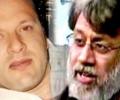
A Delhi court on Monday issued fresh non-bailable warrants against Pakistani-American David Coleman Headley, his accomplice Tahawwur Rana, Lashkar-e-Tayiba founder Hafiz Saeed and 26/11 attack mastermind Zaki-ur-Rehman Lakhvi, who are accused of carrying out terror attacks in New Delhi.

India has made a fresh demand in a reply to Pakistan's request to send 24 Indian witnesses to record their statements in the case

India has given a written assurance to Pakistan that a legal panel of that country will be allowed to cross examine four witnesses in the 26/11 attacks case when it visits Mumbai for the second time.
India on Friday summoned Pakistan's deputy high commissioner and lodged a strong protest against the adjournment of the ongoing Mumbai terror attack case trial in Pakistan.

A Pakistani prosecution witness on Wednesday recorded his statement against one of the seven accused, who used an international SIM card to give instructions to the 10 terrorists who carried out the 2008 Mumbai terror attacks.
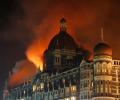
The FIA said the allegation that he had financed one of the arrested suspects in Mumbai case could not be proved after thorough investigation.
Here are the revelations made by Headley so far in the deposition

Karachi-based port worker, who had seen 10 lashkar-e-Tayiba terrorists leaving in a boat hours before the brazen Mumbai terror attacks of 2008, was cross-examined in a Pakistani anti-terrorism court on Wednesday.
'In the long run, because of international pressure, Headley's testimony will become credible in Pakistan also. And if Pakistan decides to examine him as a witness in their trial then I think there is a chance of conviction against Hafiz Saeed and Zaki-ur Rehman Lakhvi.'
